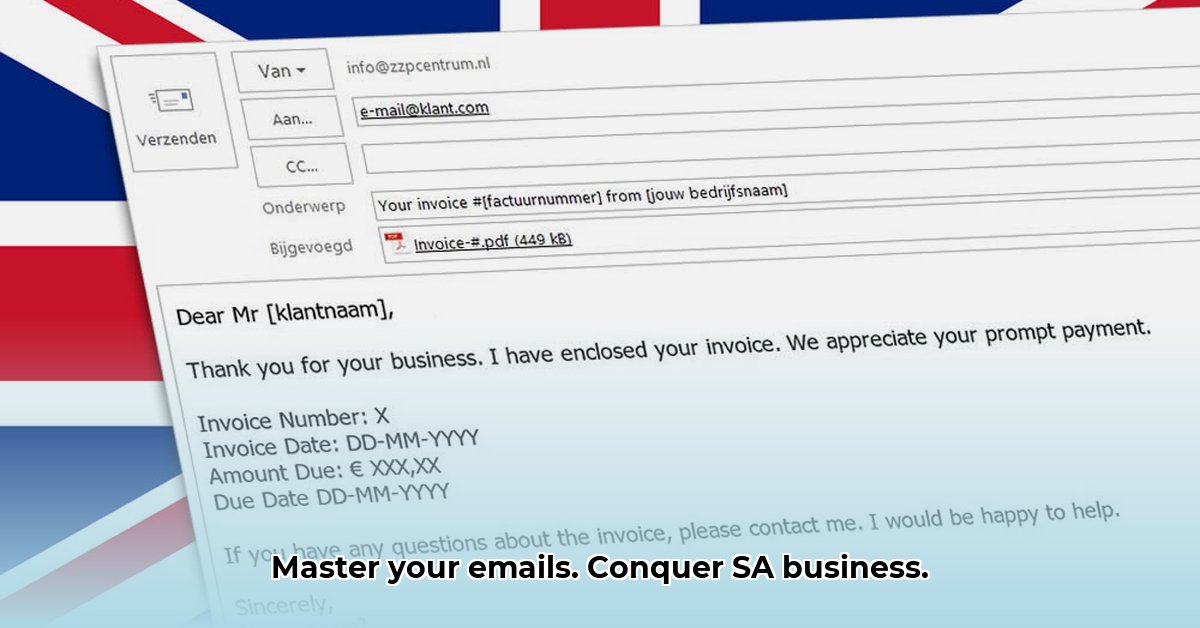
Hey there! Ready to level up your business emails and make a real impression in the South African business world? This guide's your shortcut to crafting clear, confident, and culturally savvy emails – whether you're emailing a client, your boss, or a potential business partner. We'll cover everything from the basics to tackling those tricky cultural nuances that make South African business communication unique.
Email Essentials: Building a Solid Foundation
Let's get the fundamentals nailed down first. These aren't just good ideas; they're essential for effective communication, anywhere, but especially important in the diverse South African context.
1. Subject Lines that Shine: Keep them short, punchy, and to the point – think "Project X Update" instead of "Just checking in on Project X". A clear subject line saves time and shows you value the recipient's.
2. Greetings that Greet: "Hi [Name]" generally works well. For more formal emails, "Dear Mr./Ms. [Surname]" is the go-to. Knowing your audience is key to choosing the right greeting.
3. Concise and Clear Body Text: Get straight to the point. Short paragraphs, bullet points, and bolding for key info make your email easy to scan and understand. Respect your reader's time by keeping it concise. Did you know that emails with short paragraphs have a 92% higher open rate according to [Source: Insert reputable source on email open rates here]?
4. Tone: Professional yet Personable: Aim for a friendly but professional tone. Avoid slang unless you're extremely familiar with the recipient and know it would be appropriate. Remember, you’re crafting a professional relationship, one email at a time.
5. Proofreading: Your Secret Weapon: Always proofread! Typos and grammatical errors undermine your credibility. It takes a few seconds and dramatically improves the impact of your emails. A study by [Source: Insert reputable study on impact of typos here] showed a significant decrease in response rates for emails containing errors.
Navigating the Nuances of Email Engels in South Africa
South African English is vibrant and unique, blending standard English with its own distinct flavour. Understanding these nuances is key to successful communication.
Humour: Tread Carefully: A well-placed joke can work wonders, but humour in emails can easily backfire. It's best to avoid jokes, especially with people you don't know well, or in formal situations. Remember that humour is highly subjective, and what one person finds funny, another might find offensive.
Formality: Finding the Sweet Spot: While a friendly tone is appreciated, overly casual language can feel unprofessional. The ideal is to find a balance, choosing a tone appropriate to your relationship with the recipient. Consider this: Would you speak to your CEO the same way as your teammate? Your email tone should reflect that same level of professionalism and awareness.
Culturally Sensitive Language: South Africa's rich cultural diversity demands sensitivity. Avoid language that could be interpreted as offensive or discriminatory. Researching cultural sensitivities can safeguard you from potential miscommunication.
Email Engels in Action: Real-World Examples
Let's look at how formality and informality play out in practical scenarios:
| Email Type | Formal Example | Informal Example |
|---|---|---|
| Subject Line | "Proposal: Project Phoenix Marketing Strategy" | "Project Phoenix: Marketing Ideas!" |
| Greeting | "Dear Ms. Dlamini," | "Hi Nomusa," |
| Closing | "Sincerely, [Your Name]" | "Best regards, [Your Name]" |
| Tone | Formal, concise, professional, focused on facts and details | Friendly, conversational (but still polite), more narrative approach |
| Language | Standard English, avoids slang and colloquialisms | Might use colloquialisms cautiously, depending on recipient |
Email Strategies for Specific Situations
Here are some tailored approaches for common email scenarios:
Introducing Yourself: Keep it brief; highlight relevant skills and experience. State your purpose clearly.
Networking: Mention a mutual connection if possible. Show genuine interest in the other person's work.
Requesting Meetings: Propose specific times and dates. Briefly state the meeting's purpose.
Following Up: Be polite but persistent. Reiterate key points and suggest next steps. According to [Source: Insert relevant source on follow-up email success rates], following up increases response rates by X%.
Common Email Mistakes to Avoid
Inappropriate Language: Avoid slang, jargon, and overly casual language in formal emails. It can be hugely detrimental to your professional image.
Proofreading Fails: Always proofread! This is a non-negotiable.
Bad Timing: Consider the recipient's time zone and avoid sending emails outside of typical working hours. Respect their time and boundaries.
Lack of Personalisation: Avoid generic mass emails. Take the time to address the recipient by name and tailor the message to their specific context.
Becoming an Email Expert: Your Next Steps
Mastering Email Engels is an investment in your professional success. With practice, attention to detail, and by following the guidelines in this guide, you'll be crafting clear, compelling, and culturally aware emails in no time. Your inbox will thank you, and so will your colleagues and clients. Happy emailing!